The Authors
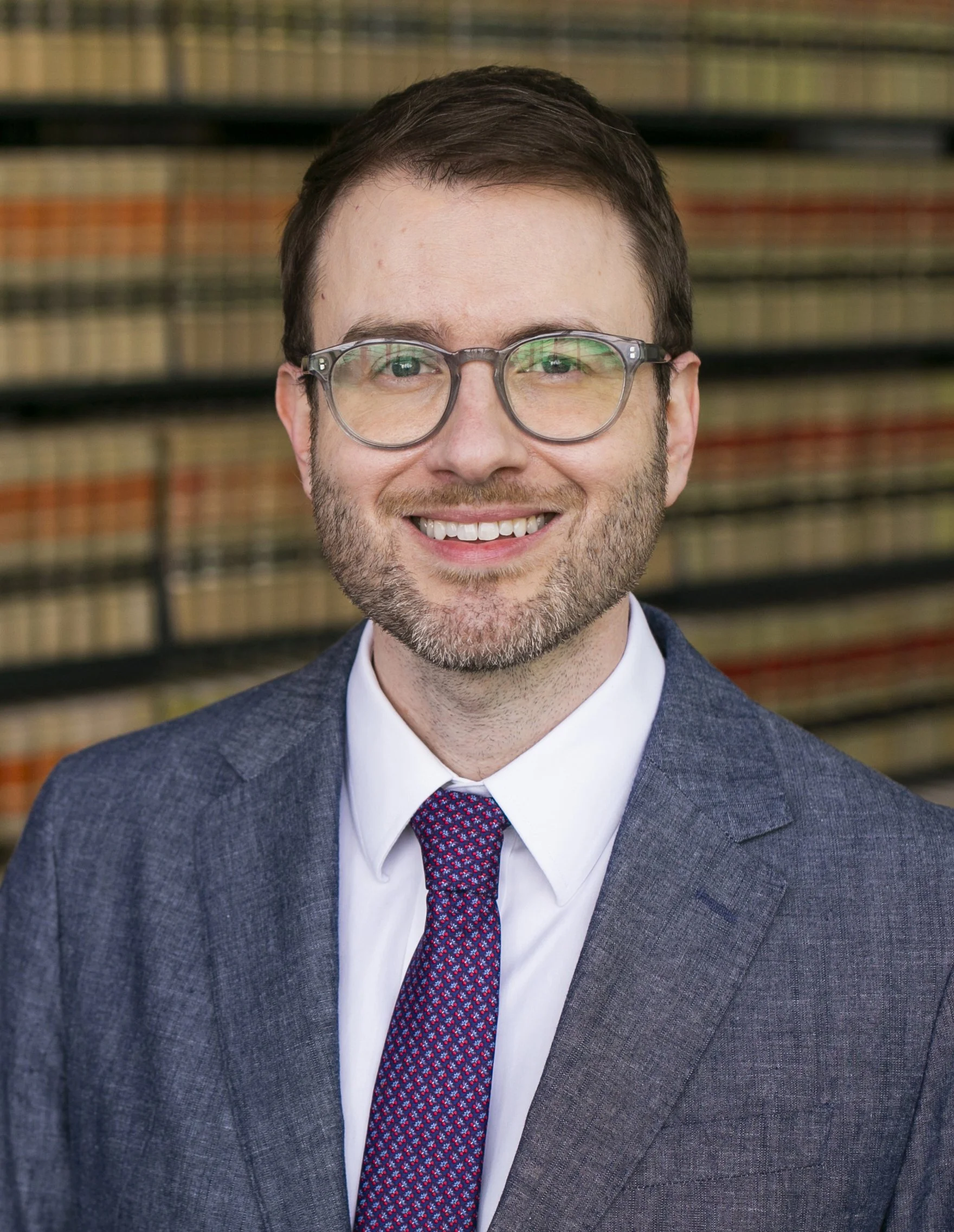
Associate Dean for Research & Faculty Development; Associate Professor of LawUniversity of Wisconsin Law School
BJ Ard
BJ Ard is the Associate Dean for Research and Faculty Development at the University of Wisconsin Law School, where he also directs the Institute for Legal Studies, and an Affiliated Fellow of the Yale Information Society Project.
Dean Ard teaches and writes on copyright, innovation, and the intersections of law and technology. His recent scholarship has interrogated the law’s role in structuring intellectual production and competition in the information economy, with particular attention to the impacts of AI. His work appears in distinguished law journals including Cornell Law Review, Emory Law Journal, Washington & Lee Law Review, Maryland Law Review, and Yale Law Journal. He is also the co-author of the fair use chapter of the leading copyright treatise Nimmer on Copyright and sole author of its new section on copyright and generative AI.
At Wisconsin, Dean Ard teaches property, intellectual property, copyright, an AI and law seminar, and, of course, technology law. The UW Law student body selected him as Classroom Teacher of the Year for 2020–2021.
Dean Ard completed his J.D. and Ph.D. at Yale Law School. His dissertation, Essays on Law and Technology, examined how law and legal institutions respond to technological change. At Yale he served as Managing Editor of Yale Law Journal and was awarded the Stephen J. Massey Prize for his work in the Community and Economic Development Clinic. After law school, he clerked for Judge R. Lanier Anderson III on the Eleventh Circuit, practiced at Irell & Manella LLP in Los Angeles, and served as a resident fellow at the Yale Information Society Project and a visiting assistant professor at the University of Arizona James E. Rogers College of Law.
Dean Ard is a principal investigator for the National Science Foundation funded project “Defending the Supply Chain of Democracy,” a partnership with the Open Law Library and the NYU Tandon School of Engineering aimed at developing secure systems for publishing, archiving, and accessing the law. Their system, The Archive Framework (“TAF”), now secures the official laws of over a dozen jurisdictions—from tribal nations to major cities to the State of Maryland, which adopted TAF to publish its code of regulations.
Dean Ard is also a core faculty member for the National Science Foundation Traineeship Program INTEGRATE, an interdisciplinary program developed to address fundamental research challenges for integrating robots into the future of work, and a member of the Executive Committee of UW's RISE-AI initiative. His service beyond UW includes the Trademark and Copyright Subcommittee of the Seventh Circuit Pattern Civil Jury Instructions Working Group, and his work as an outside reviewer for the Stanford Law Review, the Yale Law Journal, and MIT Press.

Nancy Litchfield Hicks Professor of LawUniversity of Richmond School of Law
Rebecca Crootof
Rebecca Crootof is the Nancy Litchfield Hicks Professor of Law at the University of Richmond School of Law and an Affiliated Fellow of the Information Society Project at Yale Law School. In 2024, she served as the inaugural Ethical, Legal, and Societal Implications (ELSI) Visiting Scholar at the Defense Advanced Research Projects Agency (DARPA).
Dr. Crootof is interested in the ways legal regimes respond to and shape technological development, particularly in the armed conflict and national security contexts. Much of her writing argues for using law to mitigate tech-fostered harms, with a focus on minimizing civilian harms in armed conflict. Her primary areas of research include technology law, international law, national security, and torts; her written work explores questions stemming from the iterative relationship between law and technology, often in light of social changes sparked by increasingly autonomous systems, artificial intelligence, cyberoperations, robotics, and the Internet of Things.
Dr. Crootof earned a B.A. cum laude in English with a minor in Mathematics at Pomona College; a J.D. at Yale Law School; and a PhD at Yale Law School, where she graduated as a member of the first class of PhDs in law awarded in the United States. Her dissertation, Keeping Pace: New Technology and the Evolution of International Law, discusses how technology fosters change in the international legal order, both by creating a need for new regulations and by altering how sources of international governance develop and interact.
Dr. Crootof served as a law clerk for the late Judge Mark R. Kravitz of the U.S. District Court for the District of Connecticut and for Judge John M. Walker, Jr. of the U.S. Court of Appeals for the Second Circuit. She has published with the Cornell Law Review, the Duke Law Journal, the Harvard National Security Journal, the New York University Law Review, the Pennsylvania Law Review, the Vanderbilt Law Review, the Virginia Journal of International Law, the Yale Journal of International Law, and the Yale Law Journal; and she has written for Just Security, Lawfare, Lawfire, Opinio Juris, and Slate.
Dr. Crootof is a member of the Center for New American Security’s AI Governance Forum. She is also on the Editorial Board of the Journal of National Security Law and Policy, an Associate Editor on AI and the Law for the Journal of Artificial Intelligence Research, and a Contributing Technology Editor for JOTWELL (the Journal of Things We Like (Lots)).
Dr. Crootof has consulted for the Institute for Defense Analyses, served as a member of the Center for New American Security’s Task Force on Artificial Intelligence and National Security, and was on the Council of Advisers for the Permanent Mission of the Principality of Liechtenstein to the United Nations with regard to the Application of the Rome Statute to Cyberwarfare.
She enjoys skiing, hiking, and reading science fiction “for work.”